Spain – First Missions

|
First Missions
Spain
Revised May 2, 2023
From talk by John Gunn, Overseer of Spain
Otto Kimmich and Sandy Scott were the first workers who came to Spain to labour in 1933. Three years later the civil war broke out and many Spaniards had to flee. A young lady in her twenties fled to France and got to know the Way. After the war she came back to Spain and could not return to France because the Spanish borders were closed. She did not realise that one of the Friends lived in the south of Spain, as well.
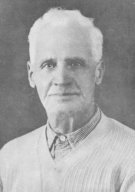
Barcelona has always been the center of the work in Spain and it was the location of the first convention. Convention is a fairly recent event there, as it is in Greece. The years of persecution by the official state church in both countries made any kind of larger gathering impossible. They didn’t have conventions in Spain until after Basilio died (1985). SPAIN: Who were the first brother workers? Otto Kimmich and Sandy Scott . They fled when Spanish Civil War broke out in 1936. When & Where was the first baptism? (info needed) *La Vanguardia Nacional Wednesday, February 26, 1986 His name was Basilio Alvarez. They called him "don Basillio". He died last Nov. 17th, at 82 years of age, in Sabadell, in the humble home of family friends. No news media spoke of him. No officials attended his burial. They never knew him nor knew of his death. He was, however, the one who bore the responsibility in all of Spain of a peculiar religious belief. To say it in a more graphic way that he would have rejected, he was something like an "episcopal conference president". He was truly someone important, not only for the responsibilities that fell to him, but also for his extraordinary personality, for the depth of his faith, for his courage and strength of character. The press and the authorities never knew him because his faith did not blend with showy religion. It was found in a dimension that cannot be described in simple terms. Faith for him was a personal event in the interior of individuals and could not be fully extended in public, neither by evangelistic propaganda nor by power or politics. This last concept constitutes the antithesis of the habitual and pernicious confusion between religion and politics that is referred to as "the confessional state", "legislation in accord with the ethics of the church" or "theology of liberation." AN UNUSUAL INDIVIDUAL He was born in Buenos Aires [Argentina], the son of Spaniard. There, a brilliant professional career would be cut off in order to fully give himself to the preaching of his faith. Jack Jackson and Herbert Vitzthum, North American preachers of Irish origin had had a great influence on him. From them he would learn of the United States of the "New Deal" era and he would admire their liberal values. He would have arrived in Spain in the 1950’s at the height of "national catholicism", at a time of complete prohibition of religious liberty. He faced especially difficult situations, similar at times to those encountered by the political resistance to the regime. Juicy dialogues are told of police interrogators, disconcerted and angered by the effect that this unusual individual had on them. His faith was that of a religious confession without name, accepting "Christianity" as its sole identifying term. A belief without temples and without hierarchy, whose meetings take place in the homes of the faithful. Their manner of life is strict and separate from worldly life, to the extent that it appears old-fashioned. Those who take on the duties of preaching leave behind all possessions, including their home and live by what is loaned to them or shared with them by the faithful, or by working at any kind of job when necessary. They accept no other written references except the Biblical texts. Nowhere do they record their history—they themselves are unaware of it beyond what they remember of their own personal experience. They deny any other origin but Jesus. And, as a result, do not claim to stem from either Catholicism or Protestantism. In any case, they feel no need for historical verification. On being asked by a stranger about this, they smile and say that what counts is to consider the "fellowship of the faithful" over the centuries and from one end of the earth to the other. They make no practice of any kind of theological speculation nor do they generate any written publications. To them, faith is something simple and sufficient, for which one may or may not be willing. They have never tried to convince anyone by arguments. They have no proselytizing campaigns, they simply try to reflect daily the intimate living of their faith, without great discourse. Certainly, their resemblance to what is called "primitive Christianity" is astonishing. Surely, this is the first that has ever been published in Spain about this atypical religious confession. I hope that what has been written does not constitute an excessive breach of their traditional discretion. To me and to my brother, whose idea it was to write this article, it has seemed a good way to render a very modest homage to don Basilio, an exceptional individual, unknown to journalists and authorities, whose impact is indelible upon all of us who knew him.
|
 REPRESENTING THE LARGEST COLLECTION OF 2X2 HISTORICAL DOCUMENTS ON THE INTERNET
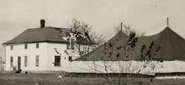 Perry, Oklahoma Conv, 1942